
6 min read
Your garage door opener doesn’t actually lift your door — the springs do. A typical door is far too heavy to lift by hand, and the springs are wound or stretched to balance almost all of that weight. There are two main spring systems on residential doors: torsion springs and extension springs. Knowing which one you have helps you understand what you’re hearing when a spring breaks, and what the repair involves.
Torsion springs
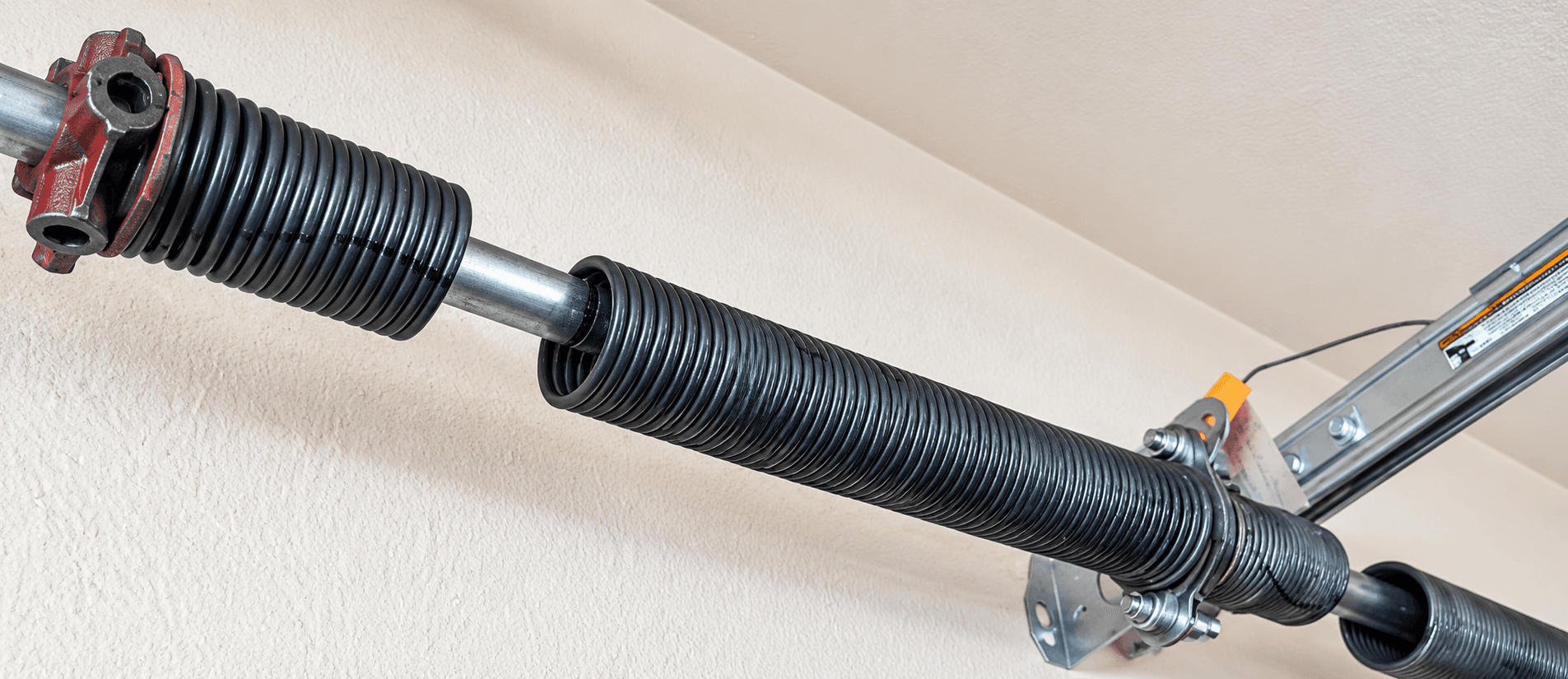
Torsion springs are mounted on a metal shaft directly above the closed door. As the door closes, cables wound on drums at each end twist the springs tighter, storing energy. When the door opens, the springs unwind and lift it smoothly.
Most newer homes in our area have torsion springs. They give a smoother, more balanced lift, put less strain on the opener, and are more contained when they break — usually you’ll hear a loud bang and see a visible gap in the coil.
Extension springs
Extension springs run along the horizontal tracks on each side of the door, above your head. They stretch as the door closes and contract as it opens. You’ll find them on many older homes and some lighter single doors.
Because they stretch under heavy load, every extension spring should have a safety cable running through its center. That cable keeps the spring from whipping across the garage if it snaps. If your extension springs don’t have safety cables, have them added.
How to tell which springs you have
- Look at the wall directly above the closed door. A horizontal bar with one or two large coils means torsion springs.
- Look up along the ceiling tracks on each side. Long springs running parallel to the tracks mean extension springs.
- Some newer doors use an enclosed torsion system, where the spring is hidden inside the shaft or a tube.
How long do garage door springs last?
Springs are rated in cycles — one cycle is one full open and close. Standard springs are commonly rated for around 10,000 cycles, which for a family using the door several times a day works out to roughly 7 to 10 years. High-cycle springs are available and are worth considering if your garage is your main entrance.
On doors with two springs, if one breaks, the other has been through the same number of cycles and is usually close behind. Replacing both at once saves a second visit and keeps the door balanced.
Why spring work is a job for professionals
A wound torsion spring or a stretched extension spring stores enough energy to cause serious injury. Adjusting or replacing springs requires the right winding bars, the correct spring size for your door’s weight, and experience. If a spring breaks, don’t try to open the door with the opener — it can damage the opener and the door can fall. Call a technician instead.
Frequently Asked Questions
Are torsion springs better than extension springs?
For most homes, yes. Torsion springs usually last longer, balance the door more smoothly and are safer when they fail. Converting from extension to torsion springs is a common upgrade on older doors.
Should I replace both springs if only one broke?
In most cases, yes. Both springs have done the same amount of work, so the second one is likely to fail soon. Replacing them together keeps the door balanced and saves a return visit.